
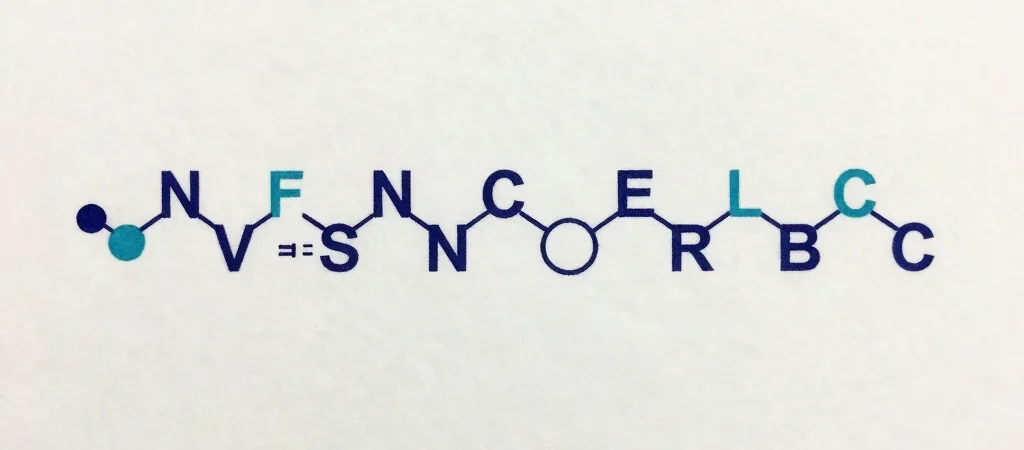
A peptide sequence can look like a row of initials until you know what the notation is doing. In standard sequence notation, residues are written from the amino terminus to the carboxyl terminus, usually using one-letter or three-letter amino acid codes. That direction is part of the information, not a formatting preference.
Read from end to end
A sequence such as A-G-S is read from the N-terminus toward the C-terminus: alanine, glycine, then serine. The hyphens may be omitted, but the order remains meaningful because changing residue positions creates a different sequence. When comparing two sequences, check their length and residue order before drawing conclusions from how similar they look.
Notice what notation omits
A plain-letter sequence does not necessarily show every chemical detail of the molecule. The termini may be modified, a residue may carry a chemical modification, or a label may be attached for a particular experiment. Look for notation keys and methods descriptions before treating an abbreviated sequence as a full molecular specification.
Those details can matter when interpreting a paper: the tested material may not be identical to an unmodified chain of the listed residues. Authors may describe modifications in a table, figure caption, or supplementary methods, so check those locations as well as the main text. If a detail is not reported, mark it as unknown rather than filling it in by assumption.
Separate sequence from outcome
A sequence can help readers discuss composition and possible molecular interactions, but it does not by itself establish a biological effect. Structure, experimental conditions, and the question being measured all shape what a study can show. Keep the sequence transcription separate from the authors’ interpretation, and record both accurately.